
Pakistan’s e-commerce sector faces operational costs surge amid new taxes
The cost of doing business for Pakistan’s e-commerce sector has significantly increased following the imposition of new taxes on courier services under the Finance Act 2025, it was learnt on Wednesday.
According to industry stakeholders, logistic service is one of the key expenses the sector has seen increase in, due to 2% withholding tax and 2% sales tax on delivery of different items based on Cash on Delivery (COD).
Courier companies have begun deducting these taxes from online sellers, in compliance with new regulations approved in the federal budget as the Federal Board of Revenue (FBR) has designated courier companies as collection agents, given that they hold sellers’ invoices and act as intermediaries.
Is the budget changing how government views e-commerce?
As per the Finance Bill, these companies are now responsible for collecting and depositing the relevant taxes on behalf of e-commerce sellers.
Pakistan E-commerce Association (PEA) chairman Omer Mubeen warned that the new tax measures would shrink profit margins and put an additional burden on customers.
Online sellers slash their margins to offer discounts and free delivery to attract customers, now they have limited options to continue their businesses as compared to physical retail shops paying nothing in taxes.
While large e-commerce marketplaces may be able to absorb some of the increased costs internally, small and medium-sized (SME) sellers are expected to pass on the financial impact to consumers in order to stay afloat.
“The rising cost of taxes, coupled with increasing fuel prices and utility charges, particularly electricity, gas, and internet are further squeezing already narrow profit margins for online businesses in Pakistan,” he said.
Mubeen urged the government to provide a transition period for sellers to register with tax authorities and proposed that the 2% withholding tax should be waived for registered merchants. He also recommended introducing a nominal 0.25% income tax for compliant sellers to ease their financial burden and encourage documentation and digitisation.
Courier companies have also started advising e-commerce businesses and individual sellers to complete tax registration in order to continue availing delivery services. Without proper registration, courier companies and online marketplaces will not be authorised to process or ship such orders.
However, one-time sellers and women selling goods from their homes will be exempted from mandatory registration under the new e-commerce tax rules.
Usman Akhtar, a Lahore-based e-commerce entrepreneur, expressed concerns over the new taxes, stating that thousands of budding online sellers, many of whom are students or young professionals, have invested time and capital to build sustainable businesses. He described the new taxes as “discouraging” for emerging entrepreneurs.
“These young sellers are now forced to bear additional tax costs and navigate a complex registration process that may not be feasible for many,” he said.
Akhtar said while other countries incentivise e-commerce and digital sectors through tax holidays and support policies to foster entrepreneurship and employment, Pakistan’s short-term revenue-driven approach threatens long-term growth potential.
The government should analyse the market trends of e-commerce growth in Pakistan, independently and review its decision to end taxes on online business across the country at least for the next five years.
Taxing the digital frontier: Pakistan’s bold move to tap e-commerce and online revenues
Online sellers slash their margins to offer discounts and free delivery to attract customers, now they have limited options to continue their businesses as compared to physical retail shops paying nothing in taxes.
According to estimates, Pakistan’s e-commerce sector has grown over 35% annually in the past five years. Today, over 100,000 micro and small online sellers are active, supporting incomes for more than a million people nationwide.
The market share of e-commerce carried out on COD model stands over 90% in Pakistan. The country’s total market size is estimated at Rs2.2 trillion ($7.7 billion), which is under 2% of the national gross domestic product (GDP) and trailing behind regional peers.

E-commerce sector: FBR implements new system for tax collection
ISLAMABAD: To facilitate effective tax collection in the e-commerce sector, the Federal Board of Revenue (FBR) Wednesday implemented a new system where sales tax on digitally ordered goods is withheld at source.
This responsibility falls on intermediaries (withholding agent) such as payment intermediaries, courier companies & online marketplaces.
This manual is intended for Payment Intermediaries (PI), Courier Companies, Online Marketplaces and other stakeholders responsible for withholding and reporting sales tax on digitally ordered goods.
READ MORE: FBR sets Rs 200,000 cash payment limit, e-commerce CoD orders
The FBR has explained the mechanism where intermediaries deduct sales tax at source from payments made to suppliers for digitally ordered goods and remit it to the FBR. The system automatically calculates sales tax as a percentage of the invoice value submitted by the supplier.
The FBR Wednesday issued a user manual to assist Payment Intermediaries, Courier Companies, Online Marketplaces, and other relevant stakeholders. It provides detailed instructions on executing statutory responsibilities through IRIS, including e-payment creation, Payment Slip ID (PSID) and Computerized Payment Receipt (CPR) generation, submission of monthly withholding statements, and the claiming of admissible sales tax credits.
It will promote accuracy, consistency, and procedural compliance across all stages of sales tax withholding on digitally ordered goods, FBR said.
The objective is to empower withholding agents and stakeholders to manage sales tax on digitally ordered goods with accuracy, efficiency, and transparency. It is intended to clarify responsibilities, provide guidance for proper utilization of the IRIS system, and ensure that all statutory obligations are met in a timely and consistent manner.
TheFBR emphasizes clarity, consistency, and informed decision-making, enabling withholding agents and other stakeholders to contribute to a transparent, reliable, and well coordinated e-commerce taxation ecosystem
Monthly statement by Payment Intermediaries /Courier Services for Digitally Ordered Goods: Payment intermediaries and Courier Services are responsible for withholding and reporting sales tax only on the amounts they collect, or settle. Consequently, their withholding statements reflect solely the payments handled through their respective systems. The withholding statement for all the withholding agents is auto-populated from CPR data of the relevant PI and Courier Service.
Monthly Statement by Online Marketplace for Digitally Ordered Goods: In contrast to PI & Courier Services, the statement for Online Marketplaces reflects the aggregate amount of all transactions, including payments processed through both Payment Intermediaries and Courier Services, as Online Marketplace’s monthly statement is generated on the basis of monthly statements submitted by the payment intermediary and courier services.
Copyright Business Recorder, 2026
Govt debt rises Rs641bn in first half of FY26: SBP
KARACHI: The federal government plans to raise around Rs 5 trillion from the domestic banking sector during the January-March 2026 quarter through the sale of government securities to finance the fiscal deficit, underscoring its continued reliance on local banks to meet funding requirements.
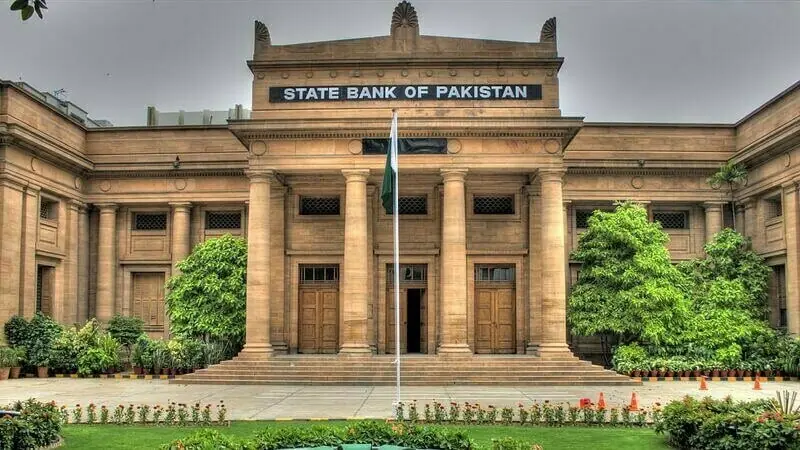
The State Bank of Pakistan (SBP) on Friday issued calendars for the auction of Pakistan Investment Bonds (PIBs) and Government of Pakistan Market Treasury Bills (MTBs) for the third quarter of this fiscal year.
Analysts said that in the absence of sufficient external financing, the federal government intends to meet most of its funding needs through domestic sources, with the bulk of borrowing planned through the sale of short-term government securities, particularly MTBs.
According to the auction calendar issued by the SBP, the federal government plans to raise around Rs 3.25 trillion through the sale of Treasury Bills during January to March of the current fiscal year, against maturities of Rs 3.589 trillion falling due in the same period.
In addition, about Rs 1.65 trillion is expected to be borrowed through PIBs, including Rs 1.35 trillion via fixed-rate PIBs and Rs 300 billion through semi-annual floating-rate PIB auctions.
Overall, six MTB auctions, or two each month, are scheduled during the quarter to help finance the fiscal deficit. Of the total, around Rs 1.55 trillion is set to be raised through two MTB auctions in January 2025, followed by Rs 950 billion in February 2025 and Rs 750 billion in March 2025 through two auctions each month.
Auctions for fixed-rate PIBs are scheduled for January 1, February 6, and March 11, 2026, with a targeted borrowing of Rs 450 billion at each auction. In addition, six auctions of floating-rate PIBs, each with a target size of Rs 50 billion, will be conducted during the quarter to meet an overall borrowing target of Rs 300 billion. Cumulatively, an amount of Rs 4.9 trillion will be mobilized during this quarter.
With cut in the key policy rate, interest payments are expected to remain lower than the budgeted amount for the full year, which may help the government to contain the fiscal deficit and less borrowing.
According to SBP, the Federal Board of Revenue (FBR) collection has slowed down considerably to 10.2 percent YoY during July-November FY26, implying significant acceleration required to achieve the budgeted tax collection target in the remaining seven months of FY26.
The SBP’s monetary policy committee in its recent meeting also underscored the importance of structural reforms, especially to broaden the tax base and privatization of loss making SOEs, to strengthen fiscal buffers while creating space for public investment and needed spending for socioeconomic uplift.

Govt debt rises Rs641bn in first half of FY26: SBP
KARACHI: The federal government’s total debt stocks rose by Rs641 billion during the first half of this fiscal year (FY26), mainly due to a rise in domestic borrowing, the State Bank of Pakistan (SBP) reported on Wednesday.
According to SBP, the overall federal government debt stocks (including domestic and external) stood at Rs78.529 trillion at the end of December 2025, up from Rs77.888 trillion in June 2025.
The increase was mainly driven by growth in domestic debt, which rose by Rs 891 billion, or 1.6 percent, during July-December FY26. Domestic debt climbed from Rs 54.472 trillion at the end of June to Rs 55.363 trillion in December 2025. In contrast, external debt declined during the same period.
READ MORE: Govt debt stocks slump Rs345bn in 5 months
The stock of external debt fell by Rs251 billion, from Rs23.417 trillion in June 2025 to Rs23.166 trillion by the end of December 2025. Slower external inflows have forced the government to rely more heavily on domestic resources to meet its financing requirements.
On a year-on-year basis, the federal government’s total debt stock increased by 9.6 percent or Rs6.882 trillion during calendar year 2025, rising from Rs71.641 trillion in December 2024 to Rs78.529 trillion in December 2025.
According to State Bank of Pakistan Governor Jameel Ahmad, the country has repaid about USD6 billion in external debt since the start of the current fiscal year. A further USD4.5 billion is scheduled to be repaid in the remaining months of FY26, up to June 2026.
He said that with the support of policy measures Pakistan’s external debt is not increasing and still stood at the level of 2022.
Analysts said that higher domestic debt indicates greater reliance on local borrowing to meet financing needs.
The latest figures underline the government’s continued dependence on domestic sources to finance its fiscal deficit, even as it manages external obligations amid ongoing economic adjustments.
According to SBP estimates from the financing side suggest an improvement in the fiscal balance during first half of FY26, indicating relatively contained expenditures. However, achieving the annual primary surplus target seems challenging.
Copyright Business Recorder, 2026

Overseas Pakistanis: ECAP welcomes digital property registration

KARACHI: Chairman of the Exchange Companies Association of Pakistan (ECAP), Malik Muhammad Bostan, has welcomed the Sindh Cabinet’s approval of digital property registration for overseas Pakistanis and the reports regarding the online execution of sale deeds.
He stated that this decision will greatly facilitate overseas Pakistanis in registering their properties.
Malik Muhammad Bostan said that overseas Pakistanis are a precious asset to the country, and the remittances they send home play an important role in strengthening Pakistan’s foreign exchange reserves. Therefore, he emphasized that both federal and provincial governments should provide maximum possible facilities to overseas Pakistanis.
Citing data from the State Bank of Pakistan, he stated that in December 2025, remittances from overseas Pakistani workers amounted to US$3.6 billion, reflecting a year-on-year increase of 16.5% and a month-on-month increase of 12.6%. During the first half of fiscal year 2025–26, total remittances reached US$19.7 billion, marking a 10.6% increase compared to US$17.8 billion received during the same period last year.
He further said that overseas Pakistanis have always played their role in serving the country’s interests while residing abroad.
The Sindh government has not only approved digital property registration for overseas Pakistanis but has also decided to amend the Sindh Registration Act, 1908, with the objective of making property registration easier for Pakistanis living abroad. These measures will significantly simplify the property registration process for overseas Pakistanis.
Malik Muhammad Bostan also appreciated the amendment to Section 38 of the Sindh Registration Act, 1908, which grants overseas Pakistanis exemption from appearing in person at registration offices.
Copyright Business Recorder, 2026